Unnamed but not Unnoticed: Peter's Mother-in-law
- Debbie Salter Goodwin

- Oct 1, 2025
- 3 min read

Jesus was in Capernaum, where Peter and Andrew lived. It was the Sabbath, and Jesus went with the brothers to their synagogue in Capernaum. Afterwards, they walked the short block to Peter’s house, where they planned to eat together. But there was a problem at home. Peter’s mother-in-law was fighting a “high” fever. (Luke 4:38) The family probably feared for her life.
I can see Jesus picking up the pace as they walked the short distance to Peter’s house. I know it’s short because I walked it during my visit to Capernaum in 2013. While only the foundation outlines of the houses remained, more structure was left of the synagogue. I was surprised at how close-knit this community must have been.

If Peter had a mother-in-law, it means he had a wife. Think about that for a moment. Peter is not a man on his own. He has family to look after. A fever that could take his wife’s mother would leave her alone as he joined the group to follow Jesus.
When Jesus walked into their simple, basalt stone home, he immediately went to the mother-in-law and took her fevered hand. Then, he “rebuked” the fever. Whatever words he used, whether aloud or silently, the fever that caused her physical distress left. That was it. Her eyes cleared. Her skin lost its clamminess, and her energy returned.
Before there was even a thank you out of her mouth, she returned to what she did best—cooking for the family and the guest who had healed her. I don’t know about you, but as soon as my fever breaks after a virus, I don't have the energy to tackle meal preparation for company.
Every time I read this story, I am struck by some simple yet profound truths. Here is what I want to remember about this story and take into my life.
Jesus addressed suffering first.
Whether there is full healing or not, Jesus comes to address our suffering. I’ve sat beside people who were not healed from their disease, but were healed of their suffering because of it. And I don’t mean only pain. It is a miracle to witness.
Jesus addressed a bigger need than healing.
Whatever Jesus gives in answer to our desperate cries for help will always draw a wide circle. Here, Jesus addressed a need behind the obvious need.
Think about some of the issues here. Why did you think the mother-in-law lived with Peter? Probably because she was a widow. Don’t you think she wanted to support the family that took her in? I see her cooking and cleaning to lighten her daughter's housekeeping responsibilities. But when she developed the fever and was bedridden, she was no longer any help and felt more like a burden.
When Jesus healed her fever, she was able to return to her way of supporting the family. The first thing she did was to cook a meal for everyone. I see her eyes light up when Jesus took the first bite of her food and made a positive response.. It was all the thank you she needed.
But there’s more.
Someone shared the news in the tight-knit village.
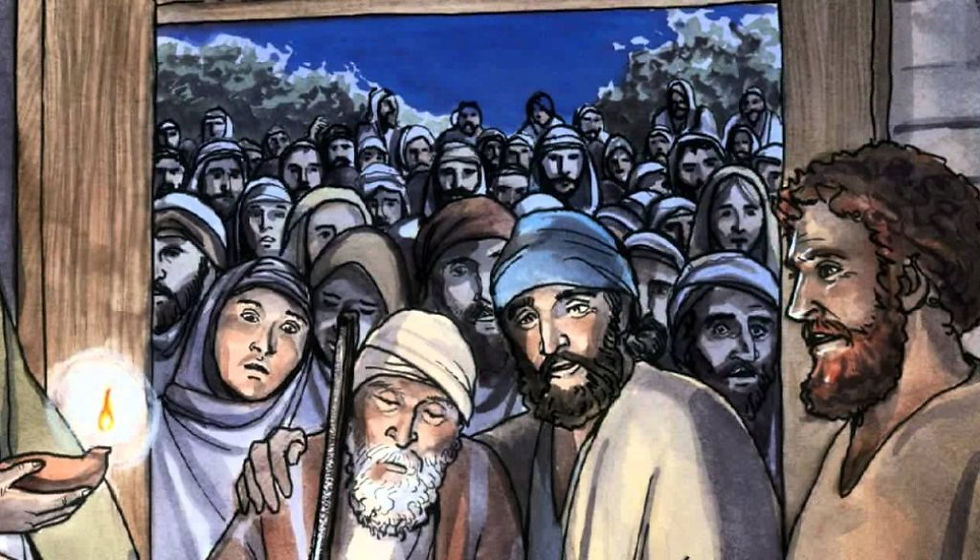
The word about the healing spread, and neighbors came to hear from Jesus and receive healing for their ailments. Who told the neighbors? My guess is that a very thankful daughter did. She reminds me that if we tell one person about what Jesus has done in our lives as a thank you to Jesus, it has ripples we can’t predict.
What I learn about this story is that an encounter with Jesus always addresses some need behind the obvious one. We focus on the obvious need. Jesus always sees the bigger picture. I think we can too, if we try. But praying beyond the one thing we want Jesus to do is hard. Trying to see a bigger picture feels off-center.
Jesus heals. I know that from my life experiences. However, he doesn’t always heal where we focus first. I’ve found that out, too.
But here’s the good truth. When we cooperate with where Jesus heals, something opens in our hearts, and I’ve found that to be an essential healing..
I think Peter saw Jesus differently that day. Jesus was a gift to his family. Jesus cared about what disrupted their lives and he addressed it. That doesn't mean that Jesus always brings healing the way we want. Perhaps if we allow Jesus to heal in his own way, it would restore something unexpected in our families and friendships, leaving a surprising witness of faith that no one can refute.
Where does Jesus want to start that healing in you?


Comments